
Read More
5 Min Read
How Medical Affairs Can Use AI to Learn the Literature
An MSL reached out to me recently, genuinely proud of herself.
She had taken my ChatGPT scheduled prompts for strategic literature reviews and adapted it to help her learn competitor data, not just summarize it. She even added a step to quiz herself so she could practice recalling the science out loud.
For the first time in a long time, she said the anxiety dropped.
She told me she’s trained on the data. She reads the literature and keeps up with competitor publications. But despite doing what’s expected, she feels constant anxiety when she’s in conversations. Because she’s worried she won’t recall it clearly when it matters.
This situation is familiar to many MSLs: when an HCP asks a follow-up question or competitor data comes up unexpectedly, they hesitate. They know they’ve seen the paper. They know they understand it. But pulling it together cleanly, in real time, feels harder than it should.
This is exactly why how Medical Affairs can use AI to learn the literature matters.
FYI, this is part of our 5-Min AI for Medical Affairs series, where Vivek Mukhatyar and I attempt to get you as excited about AI as we are. We do this through AI tips that are fun, easy, and fast. Try our PackCheck AI and our Email power-up prompts.
The Same Frustration MSL Managers See After Ride-Alongs
Many Medical Affairs leaders describe a similar frustration after ride-alongs. Their MSLs are field certified. The data has been covered. The literature has been reviewed.
And yet, the conversation doesn’t always sound as strategic as they want it to be.
The issue usually isn’t accuracy. It’s recall and application.
Managers often wish their teams could more fluidly explain the healthcare landscape, discuss competitor data naturally, and use the literature strategically instead of referencing it in fragments. From the MSL side, this feels like pressure. From the MSL manager side, it feels like underperformance.
This is what happens when people rely on reading to do a job that requires learning and recall.
Here is a way to boost learning of the landscape by using AI to create infographics out of publications. You have to try it!
Reading the Literature Is Not the Same as Learning It
Staying on top of the literature is required but also extremely challenging. There are 2 abstracts published per minute. Most Medical Affairs professionals try to stay on top of the literature by reading more. Papers, abstracts, reviews, highlights. The assumption is that exposure equals preparedness.
It doesn’t.
Reading creates familiarity, not fluency. You recognize a paper when you see it again, but recognition doesn’t help when an HCP asks you to contextualize the data, compare it to competitor findings, or explain why it matters for a specific patient population.
That gap between I’ve read this and I can use this is exactly where anxiety lives.
The good news is that Medical Affairs teams are working in the genAI era and AI is exceptionally good at solving this problem when it’s used to support learning, not just summarization.
Here are some fun ways Medical Affairs have started using AI to help them learn and use the literature strategically.



How Medical Affairs Can Use AI to Learn the Literature
When Google released the infographic feature in NotebookLM, my eyes almost popped out of my head.
You upload a paper, click a button, and an extremely good infographic pops out. Not a gimmick. Not a toy. A legitimately useful way to visually organize the science.
Turning scientific papers into infographics forces prioritization. It strips away noise. It makes you decide what actually matters and how it fits into the broader healthcare and competitor landscape.
Here is one I made from a random dermatology paper (seriously from 1 click!):
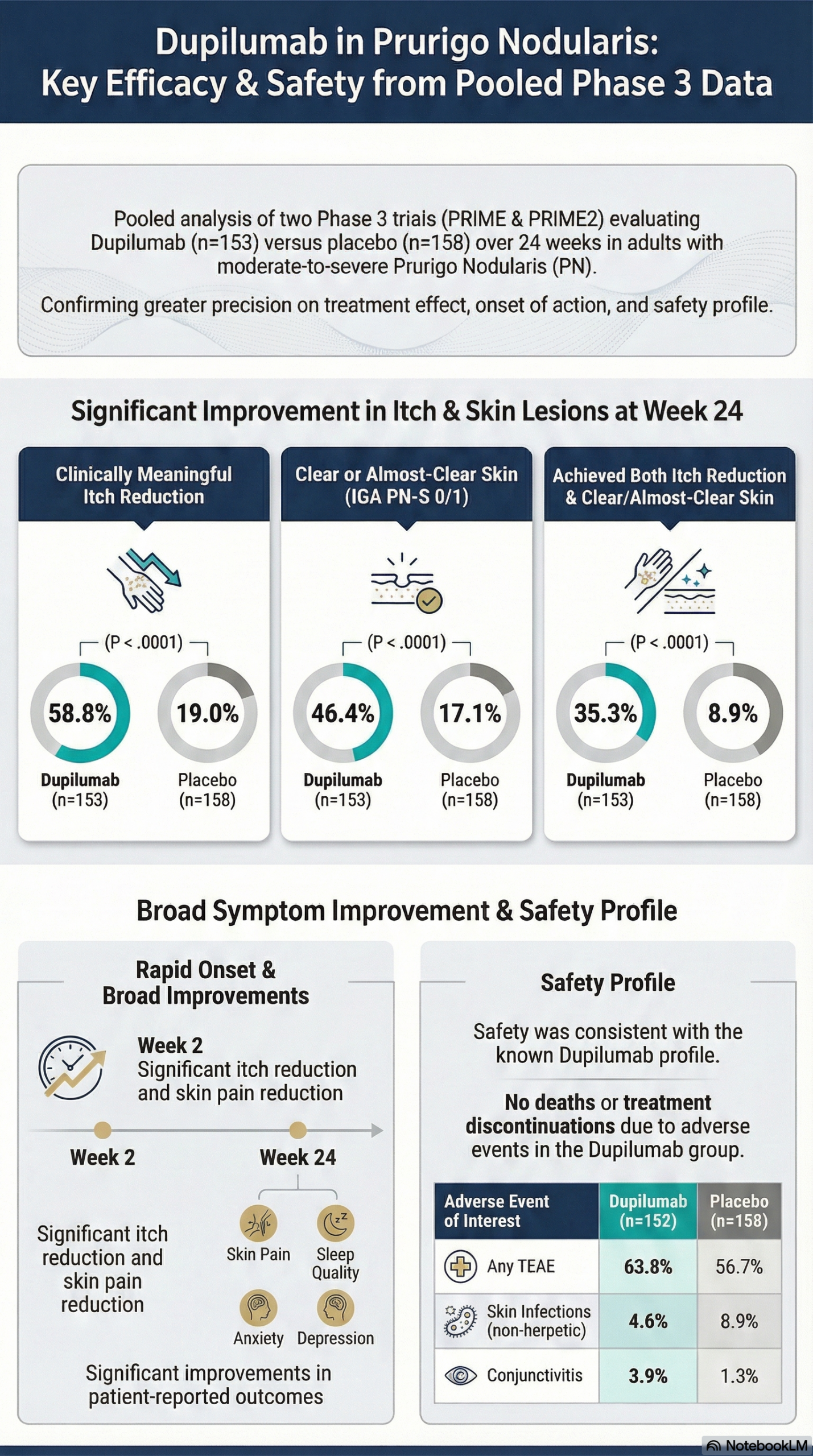
How to Convert a Publication Into an Infographic Using NotebookLM
Log into NotebookLM and start a new notebook. Upload your publication as a source. Click the pencil icon:
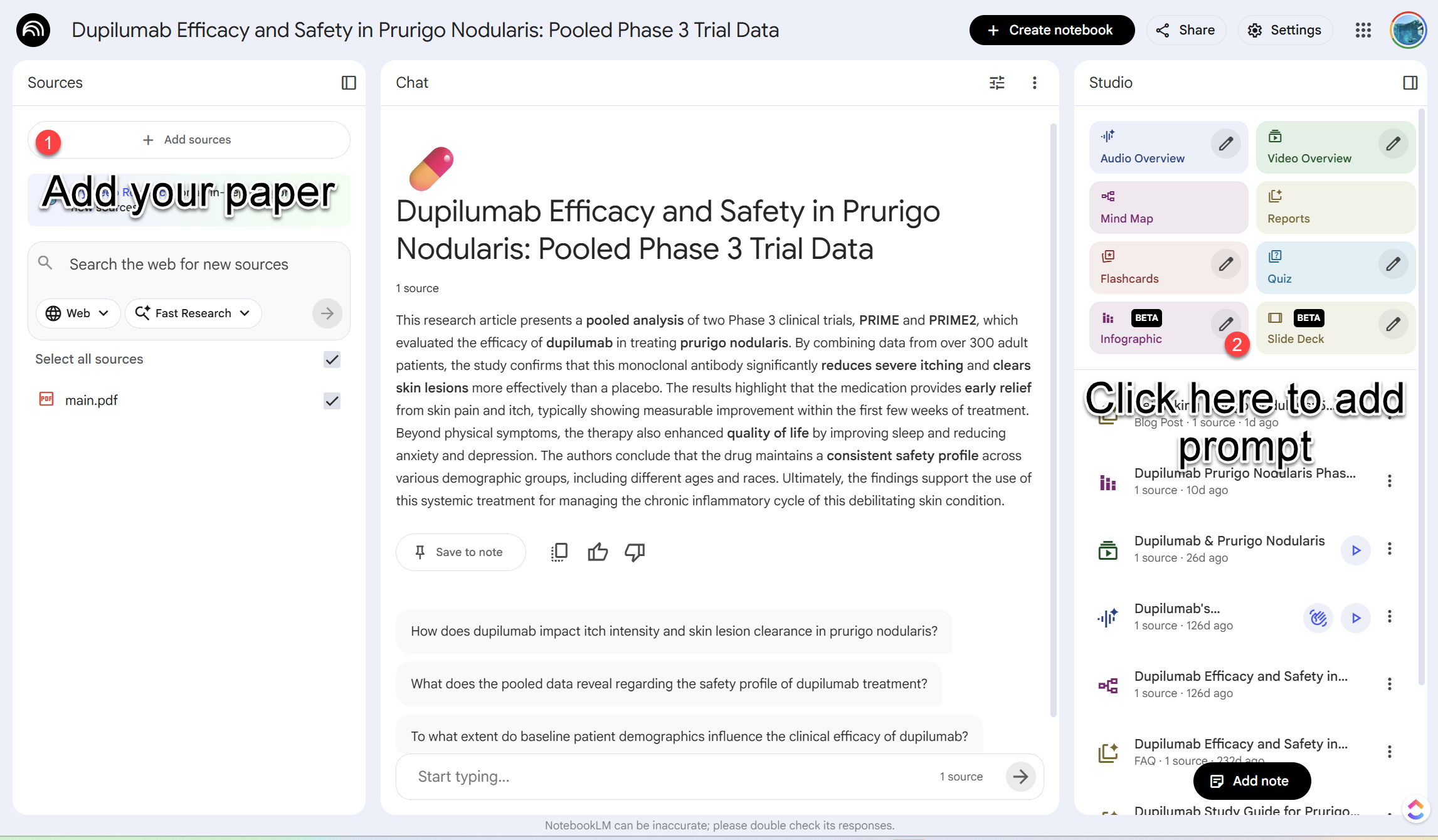
Add this prompt (or make your own and then tell me about it 🙂):
“Use the perspective of an MSL preparing for a meeting and needing to know this data very well. Use a corporate and scientific style.”
Click generate.
A few minutes later, voilà! Clean infographic. You should still verify the data against the original paper, but this is a powerful way to visually organize complex information.
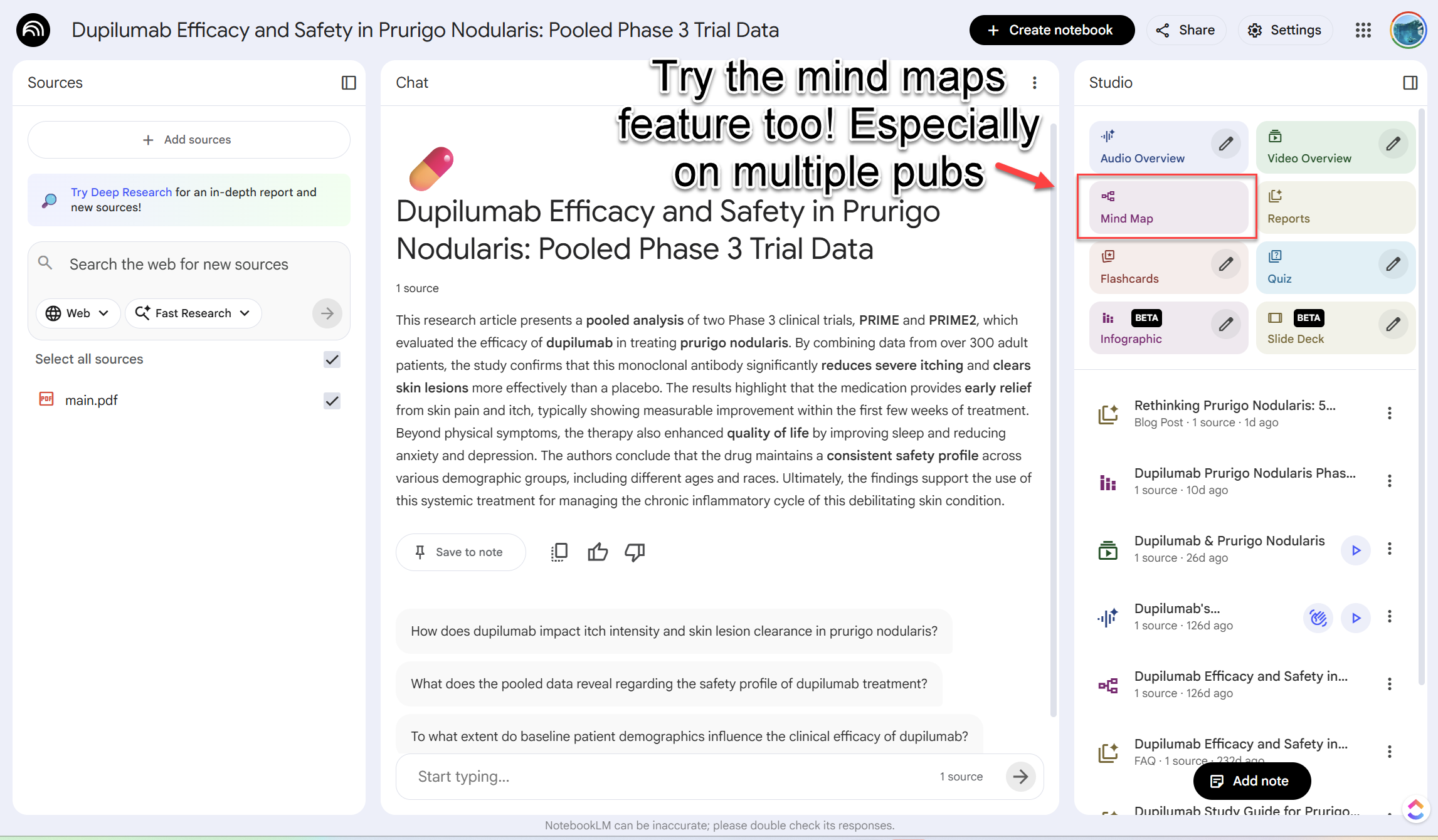
If you haven’t tried the mind map button yet, click that too. It’s another excellent way to surface patterns across the literature. And it’s a game changer for conference planning. Learn how to use NotebookLM for conference planning in this paid webinar.
What happens next is the real win.
Key findings, context, and implications are now structured visually. Patterns become obvious. Competitor data fits into a clearer framework. Instead of remembering dozens of disconnected details, the brain remembers the structure of the information.
And structure is what supports recall during real conversations.
Why This Improves Confidence in Conversations
Infographics reduce cognitive load. They make complex information easier to retrieve and easier to explain. That’s why MSLs who use this approach report less anxiety and more confidence when data comes up unexpectedly.
It also addresses what managers are really asking for when they say they want their teams to “know the data better.” They’re not asking for memorization. They’re asking for fluency.
If you’re not using AI to learn (not just draft emails), you’re making this job harder than it needs to be.
It’s challenging to stay on top of the literature and basically impossible to do without a system.
This is part of the system, especially if you’re a visual learner.
Conclusions: AI Should Help You Learn, Not Just Draft Emails
If you’re only using AI to draft emails, you’re barely scratching the surface. Try these prompts to help you write emails that get things done.
The volume of scientific literature isn’t slowing down. Expectations for Medical Affairs aren’t decreasing either. Relying on memory alone is not sustainable.
AI-generated infographics help turn reading into understanding and understanding into confident communication. And this is just the tip of the iceberg.
If you want to go deeper:
-
Contact me for my unpublished prompt pack on using AI to learn
-
Check out our NotebookLM workshop for MSLs (including congress coverage)
-
Keep following me and Vivek for more 5-Min AI for Medical Affairs hacks
Whenever we publish a prompt, try it.
You’ll learn something.

Read Next

Why Course Correction is a Must for Stakeholder Engagement Strategy
5 Min ReadWhy Course Correction is a Must for Stakeholder Engagement StrategyViews expressed in this article are personal. Imagine you're the captain of a ship. The sea is vast, the weather unpredictable, and the destination is clear but far away. You’ve got...
The Most Overlooked Skill in Medical Affairs
5 Min ReadThe Most Overlooked Skill in Medical AffairsThe most surprising thing I heard at Fierce Pharma Week wasn’t about AI, omnichannel, or measuring impact. It was how often Medical Affairs came up across the other tracks: commercialization, PR, and marketing....
23 Questions Every MSL Should Ask to Gather Better Insights
23 Powerful Questions Every MSL Should Ask to Gather Better Insights Great MSLs don’t just collect data. They ask better questions that uncover the why behind an HCP’s decisions. And have mastered the art of asking questions in a way that doesn't feel annoying,...
0 Comments